NERVOUS SYSTEM-BASED CHANGE FOR ORGANIZATIONS
If the outcomes in your organization depend on people who aren't perfect, you need more than another program.
Dr. Stephanie Bacon helps CEOs, CPOs, Superintendents, and leadership teams create lasting change through nervous system-based approaches that improve communication, reduce friction, and strengthen team culture.
Through workshops, speaking, and long-term partnerships, organizations build the capacity to regulate under pressure, navigate conflict, leverage existing initiatives, and make change stick.
Workshops your whole team will love.
✓ Reduce friction before it becomes culture
✓ Strengthen communication, trust, and accountability
✓ Help initiatives succeed because people have the capacity to carry them forward
✓ Build the psychological safety for teams and leaders to tell the truth
"Stephanie has completely shifted my thoughts on professional development. Stephanie gave us the gift of breathwork, and made sure follow-up sessions directly supported our unique learning needs. Every session with Steph left me feeling lighter, brighter, and more able to find my center in times of dysregulation. Above all, Steph guided, led, and challenged me with authenticity, grace, and a warm, empathic style. Any teacher or professional who gets the privilege to work with Stephanie will feel her impact far beyond the sessions with her."
-Stacey Black | WCSD Administrator
NERVOUS SYSTEM-BASED CHANGE FOR ORGANIZATIONS
If the outcomes in your organization depend on people who aren't perfect, you need more than another program.
Dr. Stephanie Bacon helps CEOs, CPOs, Superintendents, and leadership teams create lasting change through nervous system-based approaches that improve communication, reduce friction, and strengthen team culture.
Through workshops, speaking, and long-term partnerships, organizations build the capacity to regulate under pressure, navigate conflict, leverage existing initiatives, and make change stick.
WORKSHOPS YOUR WHOLE TEAM WILL LOVE:
✓ Reduce friction before it becomes culture
✓ Strengthen communication, trust, and accountability
✓ Help initiatives succeed because people have the capacity to carry them forward
✓ Build the psychological safety for teams and leaders to tell the truth
You've done everything right. More training. Better systems. Stronger programs.
And it's still not working the way it should.
Most leadership approaches try to change behavior through information, incentives, and accountability. I start one layer deeper — with the physiological conditions that make any of that actually stick.
For leaders who are deeply invested, running hard, and quietly wondering why — with everything they've put in — the results still aren't where they need to be.
Dysregulation is expensive
Most leadership development focuses on new strategies, frameworks, and information. This work is different.
Dr. Stephanie Bacon takes leaders and teams out of fight-flight and into the evolved and brilliant parts of their brains.
Employees are burning out or checking out.
A 2025 study published in the American Journal of Preventive Medicine estimated that burnout can cost an average 1,000-person company about $5 million a year.
Much of that cost comes from presenteeism, meaning people are physically present but mentally gone.
Initiative fatigue is also a drain on both investments and people.
Each new program, framework, policy, software rollout, or re-org can add implementation cost, cognitive load, and nervous-system strain for the people expected to carry it out.
Gartner found that change fatigue can lower employees’ intent to stay by as much as 42% and performance by as much as 27%.
And when people leave, the cost compounds.
Gallup estimates that replacing an employee can cost from one-half to two times that employee’s annual salary.
Dr. Bacon’s ripple effect approach addresses the underlying causes of burnout and checkout through the nervous system, opening the channels of honest communication and action that allow leaders and teams to address problems in real time with sustainable results.
Choose the level of support
that best fits your organization.
Build shared language, understand what's creating friction, and identify the right next step.
When communication breaks down, stress rises, and initiatives stall, most organizations need clarity before they need another program.
This introductory experience helps leaders and teams understand how nervous system patterns influence communication, collaboration, and change.
Through assessment, workshops, guided practice, and strategy, your team gains practical tools, real data, and a roadmap for what comes next.
Best for: Organizations exploring nervous system-based change and deciding whether deeper support is the right fit.
Move from awareness to practice so change actually sticks.
Most organizations don't have a strategy problem. They have a capacity problem.
The Friction Fix helps teams practice nervous system-based communication, conflict repair, accountability, and collaboration in the real conditions of their work.
Instead of simply learning new concepts, teams practice new ways of relating to themselves, each other, and the work in front of them.
Over time, resistance decreases, trust grows, and initiatives become easier to implement and sustain.
Best for: Organizations experiencing tension, burnout, conflict, initiative fatigue, or inconsistent follow-through.
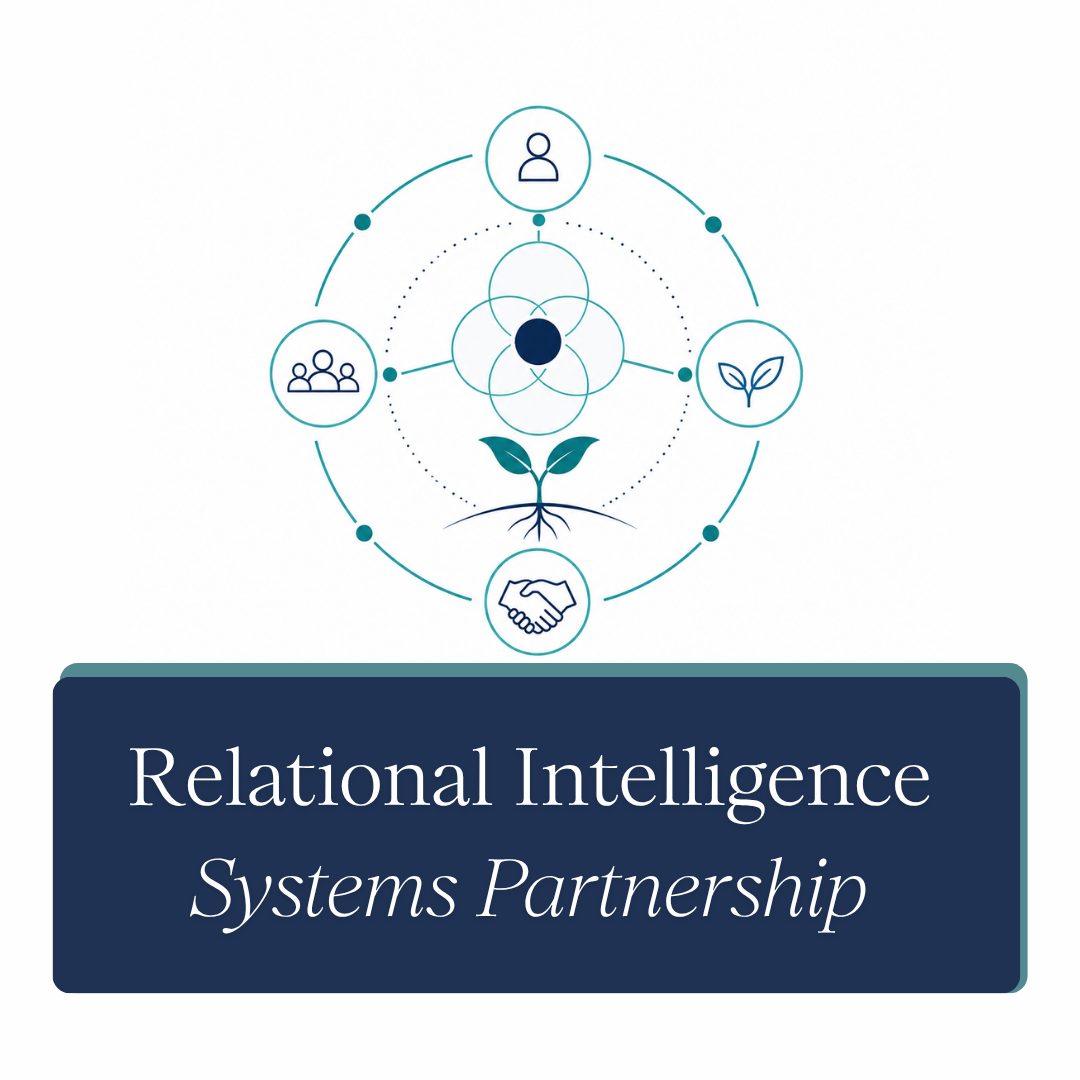
Embed nervous system-based change into the culture so the work lasts.
Sustainable change requires more than a one-time workshop.
This long-term partnership helps organizations create shared language, strengthen leadership, align stakeholders, and build the internal capacity needed for lasting transformation.
By integrating Relational Intelligence across teams and decision-making spaces, organizations develop healthier cultures, stronger communication, and more sustainable results.
Best for: Superintendents, executive leaders, and organizations committed to long-term culture change.

The research is clear:
Regulate the nervous system first, and performance, relationships, and leadership follow.
Most leaders have tried to solve culture and performance problems from the outside in — better processes, clearer expectations, more training. Those things matter. But when the people implementing them are operating from chronic stress and overwhelm, execution breaks down at the human level every time.
When the physiological conditions change, something different becomes possible. Not because people suddenly care more or try harder, they already do. But because they can finally access the capacity they already have.
The evidence behind the approach
and what it looks like inside real organizations.

Stress doesn’t just slow the brain down– it changes the brain you’re working with
Rapid + dramatic loss of prefrontal capacity under even mild, uncontrollable stress.
— Arnsten, Yale

Over half of employees are running on empty– and managers are burning out the fastest
70% of team engagement is directly tied to the manager's own state.
— Gallup, 2024

Under sustained stress, the brain trades flexible thinking for automatic habit — every time
Under chronic stress, there is a documented shift from goal directed decision making to rigid, habit based responding.
— Science, 2009

The single greatest predictor of team performance isn't talent, structure, or process — it's whether people feel safe
Teams with high psychological safety are 27% more likely to report strong performance and twice as likely to be rated as innovative.
— Google Project Aristotle, 2012

A leader's nervous system speaks before they do — and the people around them are always listening
Milliseconds before conscious thought— the body reads safety or threat from a leader’s tone and posture.
— Porges, Polyvagal Theory, 2011

91% of workers
already know what's happening — and it isn't
a training problem
91% of workers already know what's happening — and it isn't
a training problem
91%of employees say unmanageable stress directly lowers the quality of their work.
— APA, 2024
Inside organizations, this work is quieter than most initiatives and more durable.
It looks like leaders who stop absorbing every problem and start responding with clarity. Teams that used to avoid hard conversations beginning to have them. People taking ownership again, not because they were told to, but because they have the capacity to. Small shifts that, over time, change the entire texture of how a school or organization functions.

meet Stephanie Bacon PhD
I've spent my career inside the systems you're leading — and I know exactly where the breakdown happens.
For over 25 years I worked alongside talented, deeply committed leaders and educators who were doing everything right — and still hitting walls. Not from lack of effort or intelligence, but from lack of capacity.
My doctoral research on social and emotional competence confirmed what I'd witnessed firsthand: when the nervous system is chronically overwhelmed, even the best leaders lose access to their clearest thinking, strongest communication, and most effective leadership. That's the gap I work in. And when it closes, the ripple effect moves fast.
This was a great professional development. Workshops like this need to be done in more organizations. It is so important to find times to know how to breathe and how to set boundaries to improve our work and home lives.
This is 100% the most useful, valuable PD; I feel like I’ve gained universal skills that will carry over into my teaching and beyond.
I wish everyone could have this training. I think we all need to see how important the concept of energy is in the classroom (and life) and really be given the chance to experience and use it.
You don't have to have it all figured out to start.
Most leaders I work with come to the first conversation carrying a clear sense that something isn't working — but not always the language for what it is. That's exactly where we start. We'll talk honestly about where your organization is, what's getting in the way of where you want it to be, and whether this work is the right fit.
No pressure, no pitch — just a real conversation with someone who understands the terrain you're navigating.
Helping leaders embody their roles through
breathwork & nervous system regulation
GET IN TOUCH
Email Address: [email protected]
Youtube
TikTok

© 2026 Ripple Effect with Stephanie Bacon PhD LLC. All rights reserved.
© 2026 Ripple Effect Embodied SEL. All rights reserved.